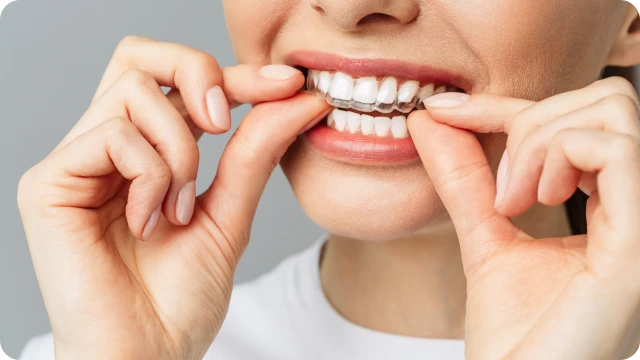
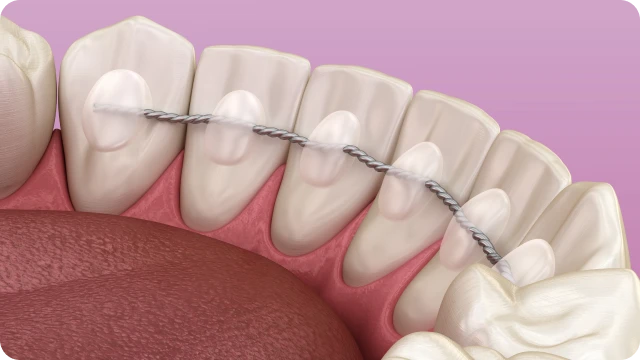
Lingual orthodontics corrects the alignment of the teeth using brackets placed on the inner side, on the tongue side. As the appliance is located behind the teeth, it remains invisible from the outside, while allowing progressive and controlled movement. The practitioner adapts the treatment plan to the clinical situation in order to respect occlusion and oral health.
The lingual appliance is the only completely invisible appliance. The only person who knows you have a device is you. This approach can be suitable for adolescents as well as adults, particularly when discretion is a priority and the indication allows it after an orthodontic assessment.
How lingual orthodontics works
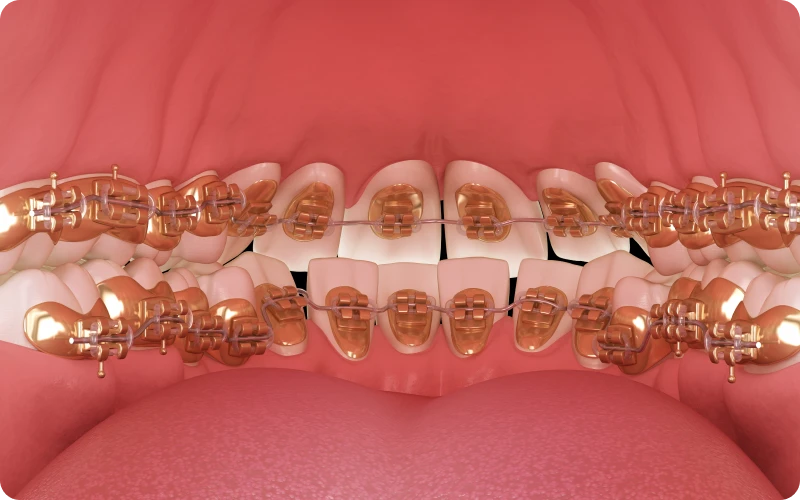
Lingual orthodontics is based on the same principle as traditional fixed dental appliances. The practitioner uses brackets and orthodontic wire to exert light, controlled forces on the teeth. These forces allow the teeth to gradually move towards the desired position.
A lingual brace functions like a fixed appliance, with precise control of the teeth, while remaining invisible. Placed on the internal side, the attachments do not alter the effectiveness of the treatment and allow complex dental corrections with great precision.
Each lingual appliance is custom designed. The practitioner adapts the shape, position and settings according to dental anatomy and treatment objectives.
Who is lingual orthodontics for?
Lingual orthodontics can be offered at any age, as long as the permanent teeth are in place. It is aimed at both adolescents and adults wanting a discreet solution.
Not very aggressive on the teeth, equipped with an extreme level of customization, an extra thin design to improve comfort, this device makes it possible to treat simple or complex cases and is suitable for all ages. However, a period of adaptation is necessary.
The practitioner always checks the indication before proposing a lingual appliance. Certain orthodontic situations lend themselves particularly well to this technique, while others require a different approach. A personalized assessment allows you to choose the most suitable solution.
Which issues can lingual appliances correct?
Lingual orthodontics can treat a wide variety of orthodontic situations. The practitioner can correct both slight defects and more significant imbalances.
Among the frequent indications, we find:
- dental overlaps;
- spaces between teeth;
- dental rotations;
- occlusion imbalances;
- certain anomalies in the position of the anterior or posterior teeth.
Thanks to its precision, the lingual appliance offers fine control of dental movements, while remaining completely invisible from the outside.
Components of a lingual appliance
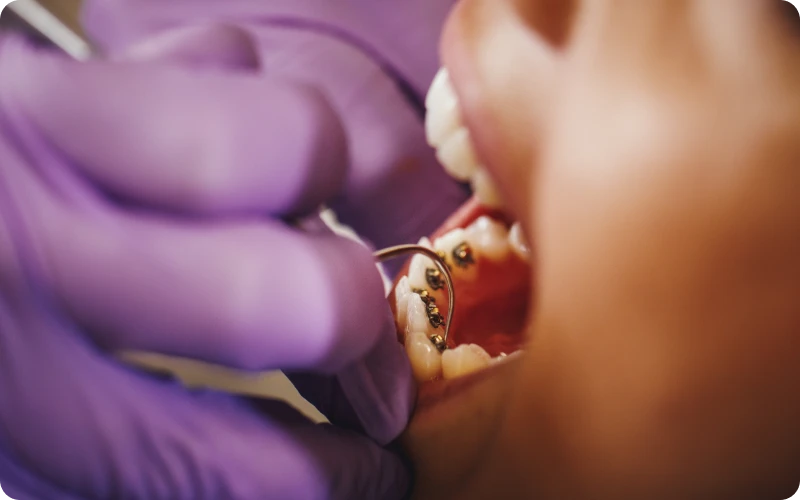
A lingual orthodontic appliance is made up of several elements adapted to the internal surface of the teeth. We find in particular:
- lingual brackets glued to the inside of the teeth;
- an orthodontic wire connecting the brackets;
- sometimes additional elements, depending on the objectives of the treatment.
The brackets are custom designed to perfectly adapt to the shape of each tooth. This personalization contributes to the precision of the treatment and daily comfort.
Lingual Orthodontics and comfort
Lingual orthodontics is distinguished by its specific design. The ties are designed to be as thin as possible, to limit discomfort to the tongue. Despite this, a period of adaptation remains necessary.
During the first weeks, the patient may feel:
- discomfort linked to contact with the tongue;
- a temporary change in speech;
- a feeling of tension when making adjustments.
These feelings usually change over time. The practitioner supports the patient during this phase and offers advice to facilitate adaptation.
The duration of lingual orthodontic treatment
The duration of lingual orthodontic treatment depends on several factors. It varies depending on the complexity of the movements to be performed, the initial situation and the response of the teeth.
During the orthodontic assessment, the practitioner gives an estimate of the duration of the treatment. This estimate may change over the course of monitoring, depending on the evolution observed and the necessary adjustments.
On average, the duration is comparable to that of a traditional fixed appliance treatment, while offering total discretion.
Lingual Orthodontics and daily life
One of the main advantages of lingual orthodontics lies in its invisibility. The device is located on the inside of the teeth, which allows the smile to maintain a natural appearance throughout the treatment.

On a daily basis, the patient can:
- talk, smile and interact without the device being visible;
- pursue social and professional activities without aesthetic constraints;
- benefit from a fixed treatment without visual impact.
Simple organization helps you live more comfortably with a lingual appliance, particularly by following the instructions given during appointments.
Oral hygiene with a lingual appliance
Wearing a lingual appliance requires special attention to oral hygiene. The internal positioning of the brackets requires careful cleaning to avoid plaque accumulation.
The practitioner generally recommends:
- careful brushing after each meal;
- the use of suitable interdental brushes;
- careful rinsing to remove food residue;
- regular follow-up to check the condition of the teeth and gums.
Good hygiene contributes to the smooth running of the treatment and daily comfort.
Follow-up during lingual orthodontic treatment
Follow-up is an integral part of treatment. Regular appointments allow the practitioner to monitor progress, adjust settings and answer questions.
During these consultations, the practitioner:
- checks the position of the teeth;
- adjusts the orthodontic wire if necessary;
- checks the adaptation of the device;
- ensures comfort and good maintenance.
In the event of persistent discomfort or particular difficulty, it is advisable to contact the office to assess the situation.
After treatment: the stabilization phase
As with any orthodontic treatment, a stabilization phase follows the active phase. This step aims to maintain the results obtained and limit the risk of tooth movement.
The practitioner explains the modalities of this phase and emphasizes its importance. Following the instructions helps preserve dental alignment in the long term.
Make an appointment for lingual orthodontic treatment
You can make an appointment online with the Orthovital clinic in Paris 16 to take stock of lingual orthodontics and check if this approach is suitable for your situation. The consultation allows you to examine the occlusion, specify the possibilities for correction and present the device, its monitoring methods and the adaptation period to be expected.
FAQ
Is lingual orthodontics really invisible?
Yes. The brackets are placed on the inside of the teeth, making the appliance invisible from the outside.
Is the treatment as effective as a traditional device?
Yes. A lingual bracket works in the same way as a traditional fixed appliance.
Is there an adaptation period?
Yes. A period of adaptation is generally necessary, particularly for the language.
Is lingual orthodontics suitable for adults?
Yes. It is suitable for all ages, as long as the permanent teeth are in place.
Is hygiene more restrictive?
It requires more rigor, but appropriate advice makes everyday life easier.