We generally consider that a child enters orthodontic adolescence when all of their adult teeth are in the mouth. This most often happens around age 12. At this age, the permanent teeth are almost complete, while retaining growth potential. This context is important because it can help correct certain imbalances, especially when they concern the jaws.
An orthodontic consultation in adolescence allows you to take stock of the alignment of the teeth, occlusion and the proper eruption of permanent teeth. The practitioner assesses the situation globally, then offers appropriate support if treatment is necessary. This step also makes it possible to explain the course of the treatment, the estimated duration and the instructions to follow.
Why is this period often favorable?

Adolescence corresponds to a phase where growth is not completely complete. Even though permanent teeth are present, the jaws continue to evolve. This can facilitate certain corrections, especially when a discrepancy between the jaws persists or when the occlusion remains unstable.
This period also allows us to act before certain imbalances take hold. However, the practitioner adapts the treatment to each adolescent, because the rate of growth varies from one patient to another.
What are the goals of orthodontic treatment during adolescence?
When treating an adolescent patient, the practitioner seeks to correct frequent situations, which can affect comfort, the aesthetics of the smile and the functional balance of the mouth. The objectives vary depending on the diagnosis, but they are often organized around several axes.
Treatment may aim to correct:
- poor dental alignment;
- a misalignment of the jaws if this has not been corrected during a first phase of early treatment;
- poor eruption of one or more teeth;
- managing lack of space.
These corrections are made in a progressive and controlled manner, with regular monitoring in order to adapt the settings and check progress.
Multi-bracket braces: the most commonly used technique
In teenagers, a vestibular technique is generally used, also called multi-bracket braces. The practitioner bonds brackets to the outer surface of the teeth and then connects them with an orthodontic wire. This system allows teeth to be moved accurately and progressively, according to a predefined treatment plan.
The multi-attachment device makes it possible to manage various situations, including when the lack of space is significant or when certain teeth have a more complex position. The practitioner can also use additional elements, such as elastics, if the situation requires it.

Compliance and follow-up: key success factors
The adolescent’s cooperation plays an important role in the smooth running of the treatment. When the practitioner requests the wearing of elastics or specific instructions, their compliance influences the progression and duration.
On a daily basis, a few habits make it easier to follow:
- come to check-up appointments on the scheduled dates;
- maintain careful oral hygiene;
- follow the instructions given for feeding;
- quickly report an unusual disturbance or a loose element.
Regular monitoring makes it possible to check the adaptation of the device and to maintain consistent progress.
Treatment duration in teenagers
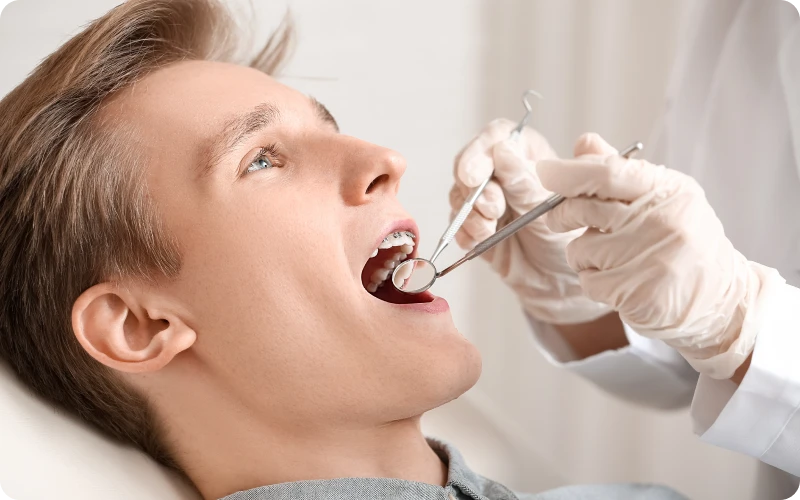
The duration of treatment, between 12 and 36 months, depends on several factors. The practitioner specifies it during the assessment, then adjusts it according to developments.
The main elements that influence the duration are:
- the severity of the problem to be corrected;
- cooperation, especially if rubber bands are necessary;
- the regularity of follow-up appointments;
- the existence or not of a first phase of treatment.
The treatment may be a little shorter if the patient has completed a first phase of treatment. In this case, the teeth have sometimes already benefited from early guidance, which simplifies certain movements.
After treatment: stabilizing results
Once the objectives have been achieved, the practitioner sets up a stabilization phase. This step aims to maintain the position of the teeth and limit spontaneous movements after the end of active treatment.
The practitioner explains the chosen device and the follow-up instructions. This phase is an integral part of the treatment, because it helps maintain the results over time.
FAQ
From what age do we start talking about adolescent orthodontics?
Generally around age 12, when permanent teeth are present, with growth potential still existing.
Why treat during adolescence rather than adulthood?
Because growth can still help correct certain imbalances, particularly in the jaws.
Which device is used most often?
Most often, the practitioner offers a multi-attachment device placed on the external surface of the teeth.
How long does the treatment last?
The duration generally varies between 12 and 36 months, depending on the situation and the cooperation.
Is treatment shorter after early treatment?
Often, yes. A first phase can simplify and shorten the treatment of adolescence.