Children’s orthodontics is part of a preventive approach that supports growth. The start of treatment varies depending on the type of issue involved. A first consultation may, for example, be prompted by persistent thumb sucking, which can lead to changes in tooth position or jaw growth.
In children, the objective is not only to align the teeth, but above all to observe and guide the development of the jaws and the functions of the mouth. Early treatment sometimes makes it possible to act at the right time, during growth, in order to limit certain unfavorable developments.
What is the best age for the first consultation?
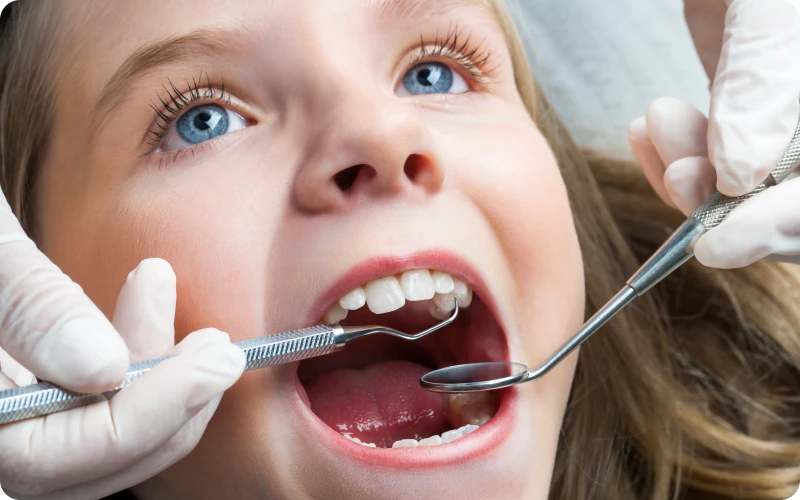
For most children, the ideal age for a first orthodontic consultation corresponds to the arrival of the permanent incisors. This period is most often between 6 and 8 years. At this age, the teeth are called mixed, because the milk teeth coexist with the first permanent teeth.
This consultation does not necessarily mean that treatment will be implemented. Above all, it allows you to take stock of growth and detect possible anomalies. The practitioner then observes several key elements of oral development.
What does the orthodontist assess during this consultation?
During this first assessment, the practitioner focuses on identifying certain signs that could influence the future development of the teeth and jaws.
These include:
- identify the consequences of distorting bad habits, such as thumb sucking;
- analyze the correct meshing of the jaws in the three spatial directions;
- assess the lack of space for future permanent teeth.
These observations help determine whether growth follows a harmonious pattern or whether early intervention may be helpful.
The role of harmful oral habits
Certain habits, when they persist over time, can have an impact on the position of the teeth and the shape of the jaws. Thumb sucking is a common example. It can cause teeth to shift, mouth to open, or jaws to become unbalanced.
During the consultation, the practitioner assesses the impact of these habits and discusses possible solutions with the parents and the child. In some cases, simple support and monitoring are enough. In other situations, orthodontic treatment may be considered.

What is early or interceptive treatment?
If treatment proves necessary, this is called early treatment or interception. This type of treatment aims to intervene at a key moment in growth in order to correct or limit the development of an identified problem.
Early treatments are designed to be short and focused. They generally last between 6 and 12 months and allow the resumption of more balanced dento-maxillo-facial growth in children. They do not seek to align all the teeth, but to correct what could hinder future development.
After treatment: a monitoring phase
Once early treatment is completed, the practitioner sets up a monitoring phase. This step makes it possible to follow the evolution of the growth and progressive eruption of permanent teeth.
Regular checks are scheduled to ensure that the situation remains stable and that the corrections obtained are maintained over time. This monitoring adapts to the growth rate of each child.
A two-step treatment in many cases

It is important to know that early treatment will be followed, in the majority of cases, by treatment with fixed appliances after the permanent teeth have erupted. Interceptive treatment therefore does not always replace subsequent orthodontic treatment.
However, this first phase often helps prepare the ground. It can simplify future treatment, reduce its duration or facilitate its progress. Each child develops differently, and the practitioner always adapts the treatment according to the situation observed.
A progressive and individualized approach
Children’s orthodontics relies on a progressive approach that takes age, growth, and each child’s specific needs into account. A first consultation helps anticipate, observe, and, if necessary, intervene at the most appropriate time.
This approach aims above all to support the child in his development, respecting his pace and proposing adapted solutions, whether simple monitoring or targeted early treatment.
FAQ
At what age should a child consult an orthodontist?
A first consultation is often recommended between 6 and 8 years of age, when the permanent incisors appear.
Does a first consultation mean that treatment will be necessary?
No. Above all, it makes it possible to assess growth and decide whether to monitor or intervene.
Does thumb sucking always require orthodontic treatment?
Not always. It all depends on its impact on the teeth and jaws, as well as the age of the child.
How long does early treatment last?
In general, between 6 and 12 months, depending on the problem to be corrected and the evolution observed.
Does early treatment always avoid a device later?
No. In many cases, treatment with fixed appliances will be necessary after the permanent teeth have erupted, but it can be made easier thanks to this first phase.