Adult orthodontics concerns a growing number of patients today. There is no age limit: from young adults to seniors, developments in practice and techniques are encouraging more people to consult and consider treatment. This makes it possible to respond to very diverse situations, taking into account each dental journey.
Contrary to popular belief, orthodontics is not only aimed at children or adolescents. In adulthood, the approach can meet aesthetic and functional expectations, and be part of a global approach to oral health. The consultation serves to take stock, then to discuss possible solutions depending on the situation.
Why start orthodontic treatment as an adult?
In adults, aesthetic reasons, but also very frequently functional ones, are at the heart of therapies. Poor dental alignment can influence the smile, but also chewing, jaw closure or daily tooth maintenance.
Orthodontic treatments can be useful for:
- align teeth and improve the aesthetics of the smile;
- rebalance the relationships between the jaws;
- restore comfort when closing the mouth;
- optimize dental hygiene thanks to better positioned teeth;
- straighten dental axes and allow the placement of implants.

These objectives are defined during a complete orthodontic assessment, which allows us to understand the patient's expectations and treatment possibilities.
What makes adult orthodontics specific
A key feature of adult treatment is the patient’s previous dental history, which can strongly influence care. Unlike children or teenagers, adults may have restorations, crowns, bridges, old extractions, or periodontal issues.
The practitioner takes all of these elements into account before offering treatment. The analysis focuses on the position of the teeth, occlusion, the condition of the gums and the overall stability of the teeth. This approach makes it possible to define a realistic treatment plan adapted to the situation.
Which orthodontic options are available for adults?
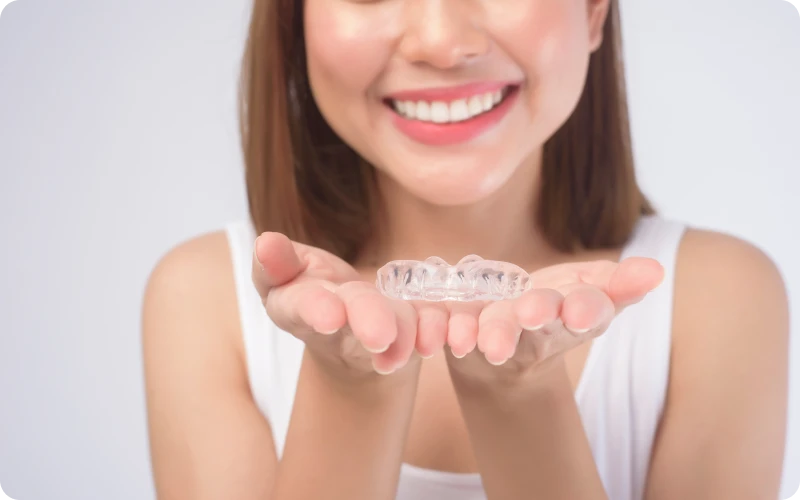
Several techniques can be considered in adult orthodontics. The choice depends on the clinical situation, treatment goals and patient preferences.
The practitioner can suggest:
- a fixed dental appliance with metal or ceramic brackets;
- transparent alignment trays, when the indication allows;
- lingual orthodontics, with brackets placed on the inside of the teeth.
Each solution has its own specificities. The practitioner explains the advantages and constraints of each option in order to help the patient make an informed choice.
Often multidisciplinary care
In adults, orthodontic treatment is frequently part of overall care. Treatment is often multidisciplinary: dentists, periodontists, maxillofacial surgeons, ENT surgeons, physiotherapists.
This collaboration makes it possible to approach the situation from several angles, particularly when additional care is necessary. Orthodontics can then prepare for or accompany other treatments, such as the placement of implants or prosthetic rehabilitation.
How adult orthodontic treatment works
Treatment always begins with a complete orthodontic assessment. This consultation allows the situation to be analyzed and objectives to be defined. The practitioner then presents the treatment plan, the different stages and the estimated duration.
Once treatment has started, regular appointments allow progress to be monitored and the devices to be adjusted. The duration varies depending on the complexity of the case, the technique chosen and the response of the teeth to movements.
Adult Orthodontics and daily life
Current orthodontic devices are more easily integrated into daily life. Depending on the technique used, the treatment can remain discreet and compatible with professional and social activity.
The practitioner gives practical advice regarding hygiene, diet and habits to adopt. Good oral hygiene remains essential throughout treatment, in order to preserve teeth and gums.

After treatment: stabilizing results
As with any orthodontic treatment, a stabilization phase is implemented at the end of active treatment. It helps maintain the position of the teeth and limits spontaneous movements.
The practitioner explains the modalities of this phase and the importance of respecting the follow-up instructions in order to preserve the results over time.
FAQ
Can you start orthodontic treatment at any age?
Yes. There is no age limit, as long as oral health permits.
Are the treatments only aesthetic?
No. The goals are often both aesthetic and functional.
Is treatment longer in adults?
The duration depends mainly on the complexity of the case and the treatment plan.
Should we consult other practitioners?
In certain cases, multidisciplinary care is necessary.
Are the results stable over time?
Yes, provided you respect the stabilization phase and the recommended follow-up.