Interceptive appliances are orthodontic devices intended for children. They make it possible to correct certain growth anomalies early. They also help guide the position of the teeth and jaws. The practitioner offers them before the complete eruption of the permanent teeth. In practice, this care often begins between the ages of 6 and 11, during mixed dentition.
The objective is to intervene at the right time, during growth, in order to guide oral and dental development in a more harmonious manner. This approach can limit the evolution of certain discrepancies. We speak of interceptive orthodontics, because it intervenes as soon as the disorder appears, before it takes hold.
In what cases are interceptive devices offered?
The practitioner considers interceptive devices when he observes an imbalance during an examination. Certain signs can also alert parents on a daily basis. The child may have a jaw that is too narrow or a discrepancy between the jaws. Persistent mouth breathing can also influence growth.

The following situations are frequently encountered:
- a jaw that is too narrow or too protrusive;
- a mismatch between upper and lower jaws;
- persistent mouth breathing;
- persistent oral habits, such as thumb or pacifier sucking;
- atypical swallowing;
- premature or delayed loss of baby teeth.
These elements can disrupt the eruption of permanent teeth and modify the functional balance of the mouth. Early intervention helps guide growth in a more peaceful manner and can reduce the risk of longer care periods during adolescence.
How do interceptive devices work?
Interceptive devices act gradually. The practitioner chooses the device according to the clinical situation and adapts the settings during the checks. The device thus supports growth without rushing the child.
Depending on the needs, the treatment can aim for several objectives:
- widen a jaw that is too narrow;
- promote more functional nasal breathing;
- correct an unsuitable tongue posture;
- create space for future permanent teeth;
- improve the alignment of the first teeth;
- support oro-facial rehabilitation.
These devices can be fixed or removable, worn permanently or only at night. The choice depends on the child’s age, growth and cooperation. The practitioner explains the instructions in simple words in order to reassure the child and his parents. In addition, the practitioner explains the instructions in simple words to reassure the child and his parents.
Fixed or removable interceptive devices
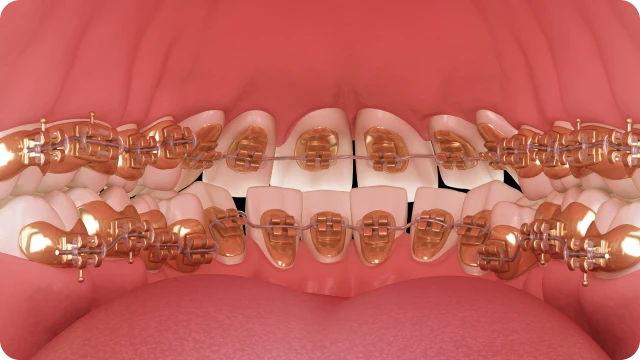
Fixed interceptive devices are attached to the teeth or palate. The child cannot remove them, allowing continuous action. This option is preferred when regular action, independent of home delivery, is sought.
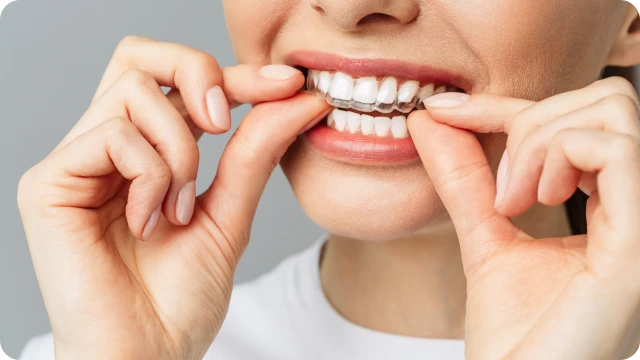
Removable interceptive appliances are removed for meals and brushing. They are most often worn at night, sometimes during the day, and their effectiveness relies on good cooperation. Removable devices must be brought to each visit so that the practitioner can check their adaptation, make the necessary adjustments and monitor their proper use.
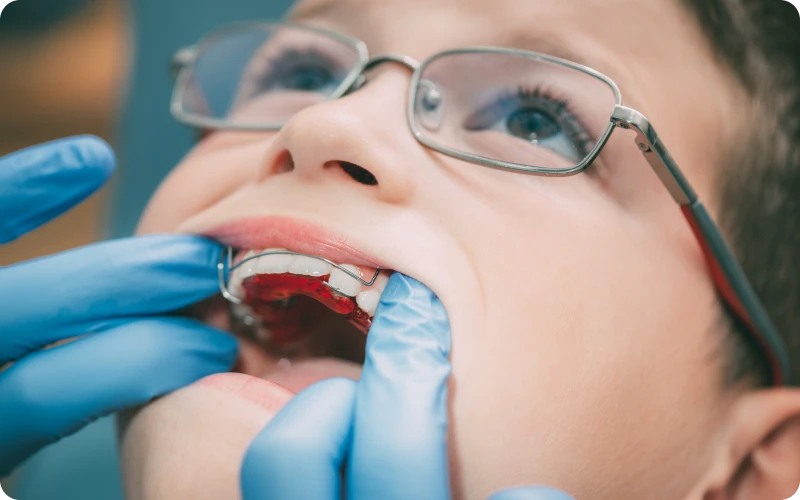
Duration and process of interceptive treatment
The duration varies depending on the initial disorder and the progress of growth. As a general rule, interceptive devices are worn between 6 and 12 months during the active period. Some may be maintained during a monitoring phase in order to verify the stability of the corrections and to support continued growth.
Regular checks allow the objectives to be reassessed and the settings to be adjusted at the child’s pace. The practitioner remains available to answer parents' questions and reassure the child throughout the follow-up.
This first phase is often followed by a second orthodontic phase with permanent teeth (fixed braces) which will be simplified and shortened thanks to this interception. Interceptive processing therefore prepares the ground, without promising an identical course for everyone.
What actions can interceptive devices have?
Interceptive devices act on several parameters. They can move certain teeth, modify the growth of the jaws and rehabilitate certain functions, sometimes supplemented by speech therapy or physiotherapy sessions. Making “room” allows the teeth to position themselves better.
Their action can be summarized in three areas:
- guide certain teeth to facilitate future eruption;
- guide jaw growth to improve jaw relationships;
- support functions such as swallowing or breathing.
The practitioner follows the child over time and monitors oral habits, which often influence result stability. Advice is adapted to maintain a simple routine suitable for the child’s age.
The role of the child and parents
Treatment works best when the child understands its usefulness. The practitioner explains the objectives with appropriate words, while the parents accompany the child without pressure. This approach promotes better involvement.

On a daily basis, families can rely on a few simple guidelines:
- follow the prescribed wear time;
- store the appliance in its case when removed;
- report persistent discomfort;
- maintain regular oral hygiene;
- attend follow-up appointments.
A reassuring environment makes adaptation easier. Some children feel anxious at first, but they usually adapt within a few days when instructions remain consistent.
Follow-up after the active phase
After the active phase, the practitioner sets up regular monitoring. They check correction stability, follow jaw growth, and monitor permanent tooth eruption.
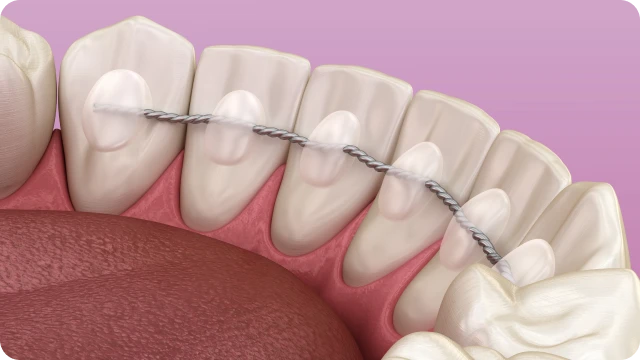
In some cases, a retention appliance preserves results until full permanent dentition. This step also helps anticipate possible next treatment if needed.
Interceptive appliances and oral hygiene
Good hygiene protects teeth and gums during treatment. First, the child should brush their teeth after meals, if possible. Next, it thoroughly cleans the areas around a fixed appliance. In addition, he cleans the removable device every day.
Common recommendations, adapted case by case, include:
- brush your teeth with a suitable brush;
- supplement with brushes if the practitioner recommends it;
- clean the removable device daily;
- avoid very sticky foods with a fixed appliance;
- report any irritation that persists.
Thus, the child maintains a healthy mouth throughout the treatment. Additionally, these habits often make tracking easier.
Make an appointment for an orthodontic check-up
If you observe a misalignment of the jaws, mouth breathing or irregular alignment of the teeth in your child, an orthodontic assessment allows you to assess the situation and consider appropriate treatment. You can make an appointment online with the Orthovital clinic in Paris 16 to discuss calmly and determine whether treatment with interceptive devices is indicated.
FAQ
From what age can treatment be considered?
We can consider treatment from 6 or 7 years old, depending on growth and needs. Thus, an assessment around this age helps to situate the situation.
Is it painful?
The child may feel pressure at first. However, this feeling often diminishes within a few days. If the discomfort persists, it is better to contact the office.
Does this always avoid treatment later?
No, not always. On the other hand, this phase can simplify and shorten subsequent treatment. Consequently, it prepares for a more favorable development.
Can the child eat normally?
Yes, in most cases. However, with a fixed appliance, the child is better able to avoid very hard or sticky foods. The practitioner gives appropriate advice.
What to do in case of breakage or loss?
You must contact the office quickly. In this way, the practitioner assesses the situation and proposes a solution, without letting the treatment interrupt for too long.