Good oral hygiene is based above all on regular and appropriate brushing. This daily gesture plays an essential role in preventing cavities, gum disease and complications related to orthodontic treatment. Adopting good habits from a young age helps preserve the health of the mouth in the long term.
Toothbrushing should be systematic and ideally carried out after each meal (morning, midday and evening), with a soft-bristled toothbrush. This frequency helps remove dental plaque effectively, which is responsible for many oral health problems.
Why is brushing so important?
Every day, food residue and bacteria are deposited on the teeth. Without regular brushing, this dental plaque accumulates and can cause imbalances in the teeth and gums.
A lack of oral hygiene can lead to:
- the appearance of visible traces of decalcification on the teeth after removing the appliance;
- inflammation of the gums (gingivitis), often painful and annoying;
- an increased risk of cavities;
- persistent bad breath.
These consequences can appear gradually and sometimes without pain at first, hence the importance of rigorous daily brushing.
Brushing during orthodontic treatment
During your orthodontic treatment or that of your children, it is essential to brush your teeth thoroughly and regularly to avoid many problems. Dental appliances, whether fixed or removable, promote plaque retention and make cleaning more difficult.
Fasteners, wires and braces create hard-to-reach areas. Insufficient brushing can quickly lead to gum inflammation or marks on tooth enamel. These marks may remain visible after the end of the treatment if hygiene has not been sufficient.
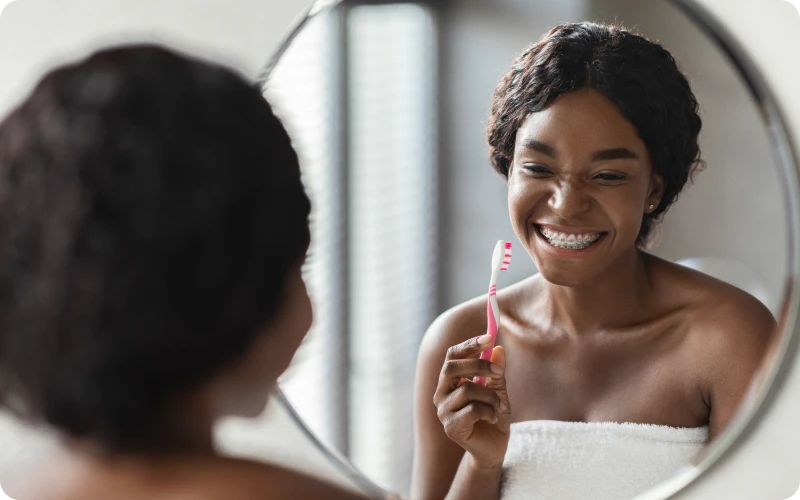
How to brush your teeth properly?
Effective brushing relies on a simple but methodical technique. It's not about brushing harder, it's about brushing better.
Here are some useful points of reference:
- use a soft-bristled toothbrush;
- brush all surfaces of the teeth (external, internal and chewing surfaces);
- make gentle movements, from the gum towards the tooth;
- devote at least two minutes to each brushing.
For patients with braces, the practitioner may recommend additional tools, such as interdental brushes, to clean the areas around the brackets.
Choosing the right toothbrush and toothpaste
The choice of equipment also plays an important role in the effectiveness of brushing. A soft-bristled toothbrush allows you to clean without damaging the gums or enamel.
Toothpaste should be adapted to the age and needs of the patient. In children, the fluoride dosage must correspond to the recommendations. In adults, fluoridated toothpaste helps strengthen enamel and prevent cavities.
The practitioner can recommend a specific toothpaste depending on tooth sensitivity or the presence of orthodontic appliances.

The importance of regularity
Regularity is a key element of oral hygiene. Occasional brushing, even if done well, is not enough to prevent problems. It is daily repetition that allows you to maintain a good balance in the mouth.
Ideally, brushing should be done after each meal. When this is not possible, rinsing with water can already limit the accumulation of residue, while waiting for complete brushing.
Dental prevention and professional follow-up
In addition to personal dental care, regular professional monitoring of oral hygiene is recommended. An annual, or even six-monthly, visit is recommended so that the specialist eliminates any form of deposits, tartar or discoloration on the teeth and polishes them.
This monitoring also makes it possible to detect possible inflammations or areas at risk early, and to adapt hygiene advice if necessary.
Special care for patients with braces
Patients with fixed dental appliances will need to have these mouth cleanings regularly, as it is difficult for them to be able to clean their teeth in their entirety. Even with careful brushing, some areas remain difficult to access.
Professional cleaning sessions then make it possible to complete daily hygiene and limit complications during orthodontic treatment.

Oral hygiene in children
For children, learning to brush is essential. Parents play an important role in developing good habits. Up to a certain age, control or assistance during brushing remains necessary to ensure its effectiveness.
Good hygiene from childhood promotes a healthy mouth and facilitates orthodontic treatment when necessary.
FAQ
How many times a day should you brush your teeth?
Ideally after each meal, three times a day.
Is a hard toothbrush more effective?
No. A soft-bristled toothbrush is best to protect gums and enamel.
Is brushing different with braces?
Yes. It must be more rigorous and sometimes supplemented by specific accessories.
Why consult regularly even without pain?
Because some problems develop without symptoms at first and are easier to prevent.