Classic orthodontics includes treatments that correct the position of the teeth and the balance of the occlusion. It aims to improve dental alignment, but also the way the teeth meet when the mouth closes. Thus, this treatment concerns both adolescents and adults, when the clinical situation requires it.
Among existing solutions, fixed dental appliances occupy an important place. In fact, they allow you to act precisely on the position of the teeth and guide their movement progressively. This approach is based on rigorous planning and regular monitoring, which are essential to obtain stable results over time.
Before any decision, the practitioner carries out a complete orthodontic assessment. This step allows you to assess the situation as a whole and define an appropriate treatment.
The orthodontic assessment: understand before acting
The orthodontic assessment constitutes the basis of all treatment. It is not limited to the alignment of teeth. The practitioner analyzes the entire mouth in order to understand its overall functioning.
During this evaluation, he studies in particular:
- the position of the teeth on each arch;
- the relationship between the upper and lower jaws;
- occlusion, that is to say the way in which the teeth mesh;
- the condition of the teeth, gums and supporting tissues.
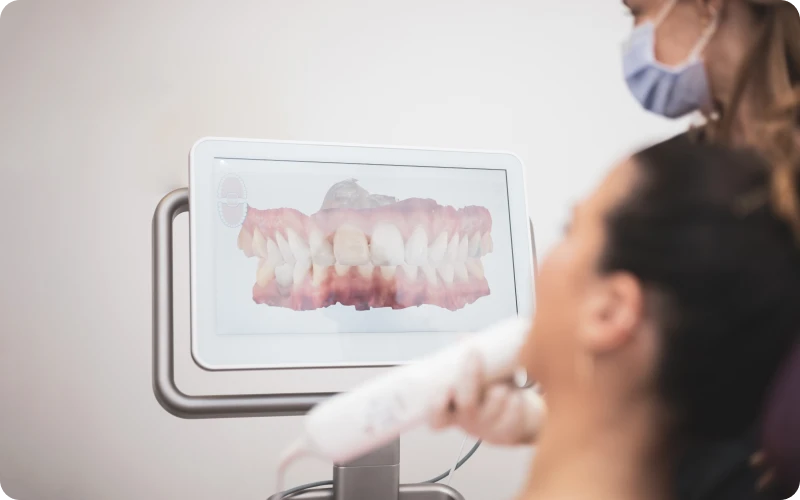
Thanks to this assessment, the practitioner makes a precise diagnosis and defines the objectives of the treatment. In addition, he can clearly explain the different stages, the estimated duration and the constraints associated with wearing fixed dental appliances. The patient thus has clear information before committing.
How fixed braces work
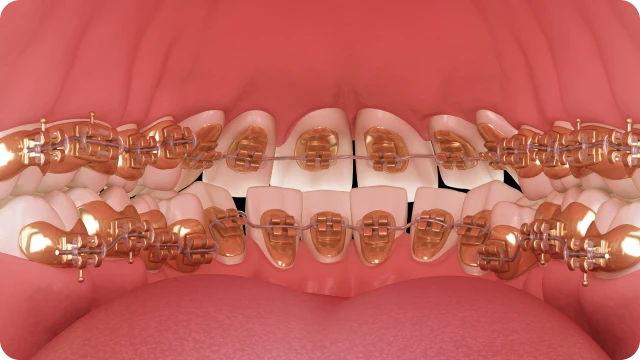
Fixed braces act directly on the teeth using a system of brackets and orthodontic wires. Ceramic or metal brackets are bonded to the outer surface of the teeth. These attachments allow the orthodontist to move teeth efficiently and precisely toward the desired result.
Each tie serves as an anchor point. Then, the orthodontic wire, which connects these brackets together, exerts controlled forces on the teeth. The practitioner regularly adjusts this wire in order to gradually guide the movements, while respecting the biological rhythm.
Thus, this progressive action corrects both moderate misalignments and more complex situations, such as significant overlaps or occlusion imbalances.
Who is this type of treatment for?

Fixed braces can be offered at different ages. In adolescents, treatment often begins when the permanent teeth are in place. It then makes it possible to optimize dental alignment and support growth. In adults, it corrects imbalances that persist or appear over time.
The practitioner always checks the indication before proposing a fixed device. Certain situations require this type of device to obtain precise and controlled dental movements, which are impossible with other orthodontic approaches.
Components of fixed braces
A fixed dental appliance works thanks to several components working together. Everyone plays a specific role in the course of treatment.
On retrouve principalement :
- brackets glued to the affected teeth;
- an orthodontic wire connecting these brackets;
- sometimes complementary elements, such as elastics or springs.
Ceramic or metal brackets are bonded to the outside of the teeth. They allow the transmission of the forces necessary for tooth movement, according to the plan defined during the orthodontic assessment.
Metal or ceramic brackets: what is the difference?
Metal fasteners provide great strength. They withstand mechanical stress well and facilitate certain adjustments, particularly in complex situations. Ceramic brackets, for their part, have a color close to that of the teeth. They thus provide additional visual discretion.
The choice between these two options depends on several elements:
- the orthodontic situation to be corrected;
- the objectives of the treatment;
- the patient's habits;
- the practitioner's recommendations.
In all cases, the ceramic or metal brackets are bonded to the outer side of the teeth. They ensure progressive and controlled movement.


Why use fixed dental appliances?
Fixed dental appliances remain widely used because of their versatility and precision.
Effective, robust, comfortable and discreet: this therapeutic tool is indicated for correcting all types of dental crowding.
They make it possible to treat a variety of situations, from simple overlaps to complex occlusion imbalances. In addition, the practitioner maintains great freedom of adjustment throughout the treatment, depending on the evolution observed.
The main stages of orthodontic treatment
Treatment with fixed dental appliances generally takes place in several successive phases.
- The initial assessment
The practitioner carries out the clinical examination and defines the treatment plan. - Installation of the device
He glues the brackets and puts the orthodontic wire in place, then explains the instructions. - The active phase
He regularly adjusts the appliance to guide the teeth to their final position. - The stabilization phase
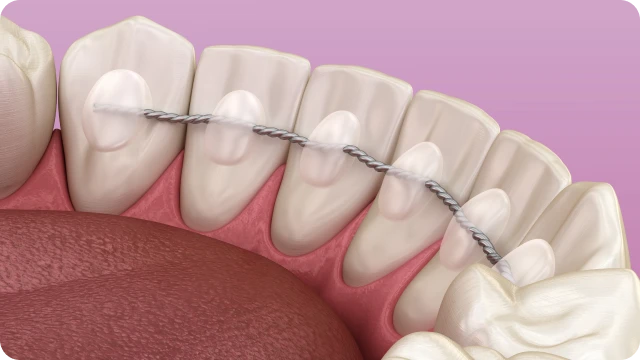
He sets up a maintenance system to preserve the results.
Thus, each step is part of a logical and explained progression.
Treatment duration with fixed braces
The duration of treatment varies depending on several parameters. It depends in particular on the importance of dental movements, the complexity of the occlusion and the biological response of the teeth.
During the orthodontic assessment, the practitioner gives an estimate. However, this duration may change over the course of monitoring, depending on the evolution observed and the necessary adjustments.
Dental appliances and daily life
Fixed dental appliances are gradually becoming integrated into daily life. An adaptation phase is common after installation or during adjustments. A feeling of tension or discomfort may then appear, linked to the movement of the teeth, then generally subsides within a few days.
In addition, the practitioner provides practical advice on diet and actions to adopt on a daily basis. These recommendations make it possible to limit discomfort, protect the device and promote the smooth running of the treatment.

The importance of oral hygiene
Wearing fixed dental appliances requires rigorous oral hygiene. The ties and wires promote plaque retention if cleaning remains insufficient.
It is therefore recommended to:
- brush your teeth after each meal;
- use a suitable brush and interdental brushes;
- clean carefully around fasteners;
- follow the recommendations given during the checks.
Thus, good hygiene contributes to the smooth running of treatment and the health of teeth and gums.
Monitoring throughout treatment
Regular follow-up is an integral part of braces treatment. During appointments, the practitioner checks progress, adjusts the equipment and answers questions.
In the event of persistent discomfort, loosening of the attachment or particular difficulty, you should contact the office. The practitioner can then assess the situation and intervene if necessary.
After treatment: maintaining results
Once the active phase is over, a stabilization phase begins. It aims to maintain the results obtained and limit the risk of tooth movement.
The practitioner explains the modalities of this phase and recalls the importance of respecting it to preserve alignment in the long term.
Book an appointment
You can make an appointment online with the Orthovital clinic in Paris 16 to take stock of your dental alignment and discuss possible solutions, such as fixed dental appliances. During the consultation, the practitioner examines the occlusion, answers your questions and specifies the course of the treatment as well as the constraints to be aware of.
FAQ
Are fixed braces only for teenagers?
No. The practitioner can also offer it to adults.
Are the fasteners visible?
Metal brackets remain more visible than ceramic brackets.
Is the treatment painful?
Tension may appear after adjustments. It generally remains temporary.
Should you adapt your diet?
Yes, certain hard or sticky foods should be avoided.
What to do if a fastener comes loose?
It is advisable to contact the office.